Sunday, October 19, 2014

To Have or Not To Have a Latino Heart? That is a good question...

A couple of weeks ago, the term "Latino Heart" came to question as labor activist, Dolores Huerta directed the lack of it from New Mexico's Governor, Susana Martinez.  This term was then used by non-Latino gubernatorial candidate, Gary King to identify Governor Martinez. Since then, the question of whether or not Dolores Huerta had a right to criticize Governor Martinez came into question. But most of all, was if the criticism she gave another Latina was opening a door for prejudice by non-Latinos.

Growing up in a predominantly Latino community in Queens, I never seemed to fulfill the requirements  of what a Latina was amongst my peers. Growing up I would be told I "speak", "dress" or "act" like a white girl; simply because I would not follow the herd of the masses. Automatically and ignorantly I believed what I heard and thought of myself as less of a Latina as everyone else. From 10 to 20 years of age I grew up confused...my parents were Ecuadorian immigrants, I grew up in a very Latino household -- the food, the music, the language, the spirituality. However when I would go outside I was convinced I was not Latina.

It was not until my sophomore year in College that I found myself and educated myself enough to strengthen my identity as a Latina. I embraced the diversity within our community and learned of the stereotypes that both we as Latinos as well as non-Latinos have learned to live with. Ignorantly categorizing our community only to poorly simplify our views on race and ethnicity. However, no matter what country we originate from, what color or religion we are -- we all hold certain core values.  Familismo, Personalismo, Machismo, Marianismo, Spirituality, Children, Kindness and Respect are values embraced on various levels by our community. 

While some, less or even none of the core values are embraced, the issues mostly affecting our community somehow define our identity. Whether we are first generation immigrants in this country or bicultural Americans, the social and economic issues affecting Latinos has an impact on all of us. Thus expanding the core values towards a broader perspective. And I think that's what creates a Latino Heart.

A Latino Heart, to me is not being limited to a stereotype -- whether or not we sound, look or act Latino or even carry the name/surname. Instead its about being close to the issues affecting our community as a whole whether or not it affects me as an individual. And that's where I would agree with activist Dolores Huerta. Politics and media have entwined stereotypes to maybe simplify our community to those who are not aware of the diversity our it holds. Whether its the fiery Latina wife in Modern Family or a politician carrying a very Latino name, such as Governor Susana Martinez -- its not enough and its not what we are ALL about.

Briefly touching upon her positions on issues of immigration, gender and healthcare, she is on the other side of the fence when it comes to sympathizing and working to help her community. Against immigration, pro-choice, government run healthcare and same-sex marriage -- all issues affecting the Latino community, I would say all she is, is a name.

The role the race card plays in media and politics is a tricky thing used to appease those who are not entirely aware of our diversity. And it is up to other Latinos to educate and broaden these narrow boundaries that have been put in front of us. As Latinos we should diversify and open our minds to the reality that we are more than just a Latino name or supposed image of what we are supposed to be. As "Latinos at Heart", we should not sell ourselves short and make a REAL presence in society because if we don't we can't blame anyone's ignorance simply because we choose to retain to our own ignorance to what it means to be Latino today.


Sunday, July 13, 2014

Soccer -- A New American Sport?

A few weeks ago, Ann Coulter wrote an article on her favorite past-time, hating soccer. Her nine point banter in sum described soccer as a foreign, savage, liberal sport promoting weakness, peace and equality; lacking in individual achievement. Thus promoting the moral decay of this country. For her a sport should promote individuality, inequality among genders, violence ("sublimated warfare" - as she described), 'Us v. Them', a gentleman's sport such as Football or Hockey. While she poorly attempts to link soccer as a sign of the moral downfall of our society, her ideal features of what a sport should be are what is wrong with our society as a whole. And instead what she attacks is exactly what we should take as an example to move further.

Soccer is a predominant sport in Ecuador, much like many Latin American countries. My dad started playing at six years of age. He got as far as being part of forming a sports club in his neighborhood, that until this day is still in effect. No matter where life took him, soccer followed him. This included his life in the United States. Four days a week he would meet with friends from all socio-economic backgrounds. No matter what country or color they were, they came together to play soccer.  I remember watching him run from work just to fit in an hour or two of soccer with his friends on weekdays. And on weekends, he would wake up early in the morning and walk to the park. My brother and I would ride our bikes to watch him for a little bit. We didn't know it back then, but looking back now, this unity was amazing...maybe that's why I fell in love with it.

To me, soccer is a clear example of how humanity is able to live in harmony. Every four years, the World Cup (both Men & Women) is held, in a designated country in which FIFA assigns. Every four years, countries from around the world come together and play. Your political, social, economic statuses are left at the door and prejudice is kicked to the curb. Fans follow their teams, cheer for them till the end. Peace can be viewed as weakness, but to me it is viewed as strength because its easier to fight for anything rather than be in harmony with everyone.

No matter the color, race, ethnicity, language of any player...the language of soccer is one. It steers the player not to become an individual but to become part of the team and help his/her teammates win. The terms "foreign" and "savage" have a historical use by racists and bigots who simply do not understand something...its an easy way out instead of reasoning in an intelligent manner.

My parents recently relocated. My dad always loving the city partly reluctant to this move was now in suburbia as well. Stranger to this country as is, he felt even more isolated. It wasn't until a few days ago as he was walking, two strangers approached him. They asked him if he knew what time the soccer game was. This was an ice breaker for both sides. And ice breaker that maybe many of us in this country are looking for when it comes to learning and communicating with other communities. He was happy and it was all it took for him to feel less isolated and maybe those two individuals felt the same way. Maybe they went home and told someone of their conversation -- while meaningless, it fundamentally was meaningful.

Am I promoting soccer to become the official sport for the United States? I wish, but no. Everyone is entitled to their own likes and dislikes of anything, this includes sports. Is soccer the beginning of the end of this country? NO! To me, soccer is simply another door long awaited in this country. It's a start to something positive in this country. Attributes that while many I'm sure hold (while others I admit, do lack) are just waiting for the smallest opportunity to show others. Beyond anti-immigrant policy, racist banters, misogynistic propaganda, individual success -- soccer can be used as an example of solidarity, peace, unity, progress.


Friday, October 18, 2013

My Identity, Her Heritage.

As we leave Hispanic Heritage Month & El Dia De La Raza behind this year, I've started to reflect on my identity once again. Not for me, but for my daughter. Identifying myself as a Latina but also as an "American" was difficult.  However, the environment I grew up in aided in creating a strong sense of identity -- Latino parents, growing up in the most diverse city in the world and peers with similar background. On the other hand my daughter will grow up under different social conditions.  And this is where my reflection lies...will I be able to instill our heritage enough where she can have a strong sense and confidence of her identity?

Having Latino immigrant parents and born in the United States exposed me two two worlds very different from one another. It gave me two languages and sometimes completely different cultural customs. From food, music, art, literature and even manners I had to live in two worlds all at once. While there were feelings of frustrations there was also a sense of pride. Looking at the world from a broader lens gave me the sense of being proud of being bicultural. Coming from an interracial family, my daughter is already exposed to two worlds + one -- the Latino, American and bicultural world. Her first years she will see the world in many shades and hopefully this can aid her to build a strong foundation and sense of pride in where she comes from.

Growing up in New York City and living there the first 27 years of my life gave me the gift of diversity. A gift which gave me the sense of loving who I am, for who I am! The children I played with, to the places I dined, shopped and simply lived my life were of different backgrounds. The varying socio-economic structures of the City gave me a sense of confidence in which I was not brought to hate myself or reject who I was or where I came from. Instead it taught me to embrace and love my diversity because I represented what New York City was all about. With an unfortunate level of gentrification in New York City, this diversity has been pushed more toward the suburbs, rapidly. While still predominantly white (54.7%, according the U.S. Census), Long Island is rapidly shifting away from a monocultural way of life. Presenting a positive and more contemporary environment for future generations.

Peers of a similar bicultural way of life, definitely aided in comforting and strengthening me throughout the years. I was growing up in two worlds and regardless of race, sex, gender, or ethnicity there were others who could relate . A sense of solidarity and comfort grew through these friendships. The unfortunate and inevitable pace of New York City's gentrification, brings upon a new light on suburbs of the Long Island area. People of diverse socio-economic backgrounds, contribute to all ages.

On a positive note, the environment my daughter will be growing up in seems promising. However suburbia's monocultural reputation perpetuating xenophobia and prejudices towards anything different from the "America way of life" does seem to be an obstacle she might have to face. Living here three years I have met, heard, seen, experienced the negative part of old suburbia. And I cannot keep myself from wondering will this "old school" way of thinking be passed down to future generations, including my child's? Will she be shamed away from her roots as I've met and known other Latinos in the area to do so. Or will my skepticism be proved wrong and change truly be present throughout her life.

All I can do for now is celebrate, educate and bring her heritage to life through family and what I've known and experienced living in more than world. Hoping that one day she too will embrace her Latinidad and represent it the way she chooses with pride.


Thursday, July 18, 2013

A Xenophobic and Racist Elephant in the Closet

In the past few months words like -- "Un-American", "Spic", "Mexican", "Immigrant" , "Illegal" have been circulating social media websites, describing people from the Latino community. In response to public appearances of two individuals singing both the National Anthem and "God Bless America". While these words held no effect on both these individuals, it has had an effect on me. It has brought about a pretty obvious problem that in the recent years have come to light towards our community and that is when you add ignorance and fear of the unknown, it equals hostility and violence.

Technology has not only closed gaps amongst societies, it has also brought the cat out of the closet. It has brought about problems people in this country might have neglected to accept. It has brought about issues people chose to sweep under the rug after certain Civil Rights Laws were passed. While policies can be reformed in order to control hate, government cannot so easily erase it from peoples' minds and way of life.

This country was founded by immigrants. Composed of immigrants. These immigrants were European individuals seeking change, acceptance, equality -- a better life. Throughout this country's history, there were different groups of European immigrants who came to this country seeking the same. At first, these groups were isolated, regarded as second-class citizens. However, they shared this status with people of color which quickly incited "Americans" to accept these white immigrants and create an accessible individual mobility for these groups. Their color became key to their social acceptance. And in return this groups quickly left many of their cultural values. To me, that was a heavy price, but as the saying goes, "to each their own", I can respect that.

Fast forward to the 19th, 20th and 21st Centuries and you have different groups of immigrants. Immigrants of color, different races, different customs, different religions. These groups seeking pretty much the same thing the first groups of immigrants sought after when they landed in these soils. However, these groups were not of white race. And to make the scenario a bit more complicated, they did not migrate the same way many of the first group of immigrants migrated. No longer could these communities work their way through society as the prior group of immigrants of the 16th, 17th & 18th Centuries. These groups had obstacles both social and economic. These groups were cast aside as second-class citizens. One of these groups are the Latino community.

A community rich in culture & diversity, not even I can say this is how my culture fully functions. But I can full-heartedly say it is a culture filled with acceptance & tolerance. I say this because we are a culture of diversity ourselves. There is no black/white scenarios to our values and way of life. But one thing is certain many of us hold these values to heart, regardless of what number of generations are living in this country. Our language, our history, our values all form our community. And as a large and growing population in this country it is seemingly scary for many "Americans" in this country. Scary when individuals such as a little boy, Sebastian De La Cruz, sung the National Anthem in a Mariachi Outfit. Scary to know that while he is proud to be born in this country, he is also proud to not leave behind who he is just to be accepted and tolerated. Scary that a young boy like him will grow up as himself and will not bullied into conforming Scary as Marc Anthony, a popular singer, native New Yorker who is proud to sing God Bless America and yet identify himself with his community by being famous for singing in Spanish and yes in English.

They don't fully hold blame for their ignorance. Their ignorance silently resonates through fact-less based media sources, peers, family, even the primary-education system. All these resources lack the proper education on a group of people that have contributed and continue to contribute to this country on all facets of its society.

In the recent years I have fortunately or maybe unfortunately faced a rude awakening. Racism, xenophobia, discrimination has not been abolished regardless of the policies in existence.

I constantly read, see or hear individuals speak of Patriotism. Its a word thrown around the national anthem, supporting troops, fighting terrorism. It is also a word thrown around to excuse hate, violence and perpetual ignorance.

"He who passively accepts evil is as much involved in it as he who helps to perpetrate it. He who accepts evil without protesting against it is really cooperating with it." These words were uttered by Dr. Martin Luther King, Jr. As a proud Latina, many have labeled and called me un-Patriotic, amongst derogatory names simply because I am part of the community which will not bargain with its values and culture in order to be accepted. What makes this country unique from others around the globe, is it's diversity. A country founded by immigrants, composed of immigrants...no matter what color we are ALL immigrants or have descended from such. The only difference is that some of us choose not to conform to the norm, but to be who we are in a diverse country. And believing that core value is what makes one Patriotic.

Sunday, June 16, 2013

Womyn Should Not Be Shamed Into Society's Norms

In our society today words such as "slut", "hootchie", "whore" are applied on an everyday basis for many girls and young women today. Words that have become acceptable because they turn into headlines in the media, topics for policy reform within our education system; Words used as an excuse to an enduring oppression for women of all ages within our society. A new method of checks and balances as to how and what we should like. And if we don't conform to these norms then we pay the consequences b being labeled these words that are perceived as derogatory.

School policies banning strapless prom dresses in New Jersey or body shaming policies in Stuyvesant High School in NYC enforce a silent message to theses young students on body shaming that will persevere throughout there lives after their academic years and onto adulthood. Not only do these policies send out the message in which young girls bodies are ruled not by themselves but by someone else's, they send out message of insecurity perpetuating a sense of inferiority simply because we're are women. As if being a woman one has to already abide by the approval of others. And if one does not abide by these norms then we would be labeled slut or invite negative actions towards us such as rape.

I clearly remember growing up in a similar culture during my high school years. Where if I wore a mini skirt in High School I'd look like a hootchie. Or if the girl next to me wore a low cut shirt would be slut. One  would be shamed away from wearing what we desired to wear simply because certain outfits would be labeled negatively by our peers. Now if we add today's policies implemented by academic administrators, we are marking a bullseye on young girls today. More victims of bullying, or a legit reason to dignify certain rape cases where "she was asking for it" may be used simply because our institutions have labeled dressing a certain way against the rules.

One does not escape the eyes of critics when we grow up. If anything I'd it becomes worst. In a recent headline, singer/performer Jennifer Lopez was criticized for wearing an inappropriate outfit for her performance in Britain's Got Talent. Labeled as family friendly, critics were on her case as to not dressing more modestly. This brought upon the question as to what a woman should dress like in order to represent modesty amongst a family.

Coming from the city, there was never a definition of what a mom looked like. There was no dress code or any form of socioeconomically labeling a mom in the city. On the other hand a suburban mom can also be known as the soccer mom. Maybe a depiction of a Stepford wife came to mind, but today less 1950s and more SUV, running to play dates, where dressing comfortably was the outfit of the day everyday. Maybe making a generalization but you get the idea. If one decides to move away from the monotonous stereotype of a mom in suburbia one attracts the perpetual body shaming we as women have endured since we were young. Once again the norm of what a mom looks like and what we have to conform to even if we might not agree continues to oppress us on an individual level.

Body shaming simply perpetuates the notion that women's appearances are valued over what we contribute to our society on a social and economic level. School policies surrounding itself on body shaming simply enforces and teaches students body shaming is permissible. This notion extends itself post academia and onto other steps in their lives. We should be able to wear and carry ourselves however we want. We should be able to celebrate our diversity as women not attack each other or enable ways and methods of oppression amongst us. There should not be a specific definition of what a girl should look like or a mom should look like or any woman should look like. We should not look over our shoulders for approval. We should celebrate our differences and our ability to choose what we want to be because it makes US happy.

Friday, March 8, 2013

A Reflection on International Women's Day...

Today is International Women's Day and a day of reflection for many, if not all of us. I will not rant on how we are Divas and Goddesses of the world. Instead I will rant upon my reflections as a woman and the legacy I have followed and hope to pass onto my daughter.

Today I reflect on the women in my family and some of the women I've met throughout my life. Today I reflect on what I hope to pass onto my daughter. How I hope to empower her. How I hope she can empower herself in a world full of gray complexities. A world in which empowered and enriched my identity.

While I think of all these women everyday through my decisions, my writing and thoughts....I'd like to point them out today.

A mothers love and care for her family is impacting and never leaves a daughter's thoughts no matter how old she is. As the oldest in my family I remember my mother's sacrifices. Her three hours of sleep were enough for her every day, working over eight hours and still having the energy caring for us. Sacrificing her desire to be with my brother and I at all time in order to provide for us alongside  my father. Yet still making time to be with us even for a few hours. Today she is a doting and wise grandmother who passes down her wisdom and surprises me everyday on all things she knows.

I never met my grandmother. But it really doesn't matter due to the legacy she left behind. I saw it everyday growing up as my father would tell us stories of my grandmothers strength. Stories my aunts and uncles would tell would simply reaffirm that she was my version of Wonder Woman. I was named after her and till this day I feel it's a name I hold dear and heavily. She became a mother at thirteen and mothered eight children. With the help of my great great grandmother she became a strong business woman and sole provider of her family. She died young but her name lives on through stories of fairness, devotion and love not only with her family but with people she helped through her good fortune.

College was a transforming experience for me. After high school I thought I knew it all, I thought I knew myself...but I was wrong. Who knew taking a Latina Women course would change my life forever.  As an elective I thought it would be a breeze to take yet it proved to be one of the most difficult courses...as it was a course which wasn't based on what I would learn from a textbook. Instead it was a course which I was forced to learn about mysel and who I really was. Through Professor Elizabeth Garcia's course I faced the complexities I was exposed to and was taught I actually had choices within them. Following her two additional courses in college I grew to learn about myself and understand in depth where I came from and how it formed me to be the person I was. I felt liberated, accepting of myself for all the gray areas I had. I embraced my identity as a woman, as a Latina, as a human being. I met other young Latinas such as myself and realized we all navigated through a gray area in which only we would understand. And while it was hard it empowered us for hit ever lied ahead.

As a new mom, I'm scared. Scared to fuck up. Yeah I know all parents say or think the same. But I am scared to not continue passing down this sense of empowerment to my daughter. I don't want to teach my daughter on how to be a little diva. I don't think of manis and pedis or dress up--- who knows if she'll even like that!! Instead  I want to pass down love and humanism. I hope to pass down a sense of activism and pride for who she is. And not for what this society expects her to be. I want to pass down strength and love for education and the wisdom her ancestors have passed down. I hope to teach her tolerance of diversity in the world.

Being from the city, living and now raising a child in suburbia, an unkown culture, I know all of this might be hard. Briefly being exposed to a culture obsessed with image and status I have come to realize I will be working overtime exposing her to a world beyond one single environment. A world that while it might be complex to navigate through, its worth doing so.

I hope to teach my daughter everything these women in my life have taught me. I hope to teach her what I learned and continue learning  on my own. I hope I will never teach her hypocrisy. I hope she has the opportunity to meet amazing human beings as I have had the privilege to.

I hope many things for her...the list could go on. But to sum it up I hope she will always find fulfillment on the three pillars....spiritual, physical and mental.

Thursday, November 15, 2012

A Latina Whom Attained a College Degree & Stayed at Home

As I took in my fill of daily news from vast resources, I toppled over a depicting article on the record number of Latinas attending College and staying at home. An article which sparked a sense of nostalgia for me as I can understand this observation.

According to the Pew Hispanic Center -- 611,000 Latina Females are enrolled in two year colleges. Unlike African-American and Whites, there are further and deeper factors to approaching and attaining a College Education.Based on the Tomas Rivera Policy Institute in 2003, factors of family, cultural tradition and community factoring in a young Latina/o's decision on where to attain a College education. The sense of familismo, personalismo, machismo, marianismo all factor in (of course, on different levels according to individual experience).

Not only am I first-generation Latina in the United States, I am also the oldest in my family. As the oldest, I took on many responsibilities. Taking care of my brother, helping my two hard-working immigrant parents in every aspect. One can say I grew up rather quickly; at eight years old I spoke English and Spanish fluently becoming my family's advocate in all aspects of life. I learned of the importance of family in order to succeed in this world and thus it resonated (still does) through everything I do.

Education is an important pillar of my family. Attaining it was and is the best inheritance my parents could have instilled in my brother and I. Be that as it may, attaining it had its differences compared to many of my peers in High School.

My senior year was crucial as the question of whether or not I would continue my education was fervently present! I did not come from a top-tiered high school. It was actually a poorly funded school. We had a small prospective graduating class and many of the same were already struggling enough in trying to stay on a passing scale. Many of us came from struggling social and economic backgrounds so the idea of College seemed far to most.

However, an opportunity opened at the start of my last year. A scholarship to DePauw University in Greencastle, Indiana!!  Out of eight candidates, only two scholarships were available and I was offered one of those opportunites. My hard work in school and support from my family helped me get there. The question was, would I take it? One signature of acceptance would grant me the opportunity to attain the education my family & I desired.

Reflecting upon this question, unlike other cultures, as a Latina I was not able accept the scholarship. Not only for my family who did question as to why would one have to travel in order to attain an education; but for myself. My family's support was pivotal in my success in academia and moving away from that, I was confident it would only hinder my goals to attain a College degree. Instead I chose to attend a CUNY College and pursue my Masters within the CUNY system as well. A decision rewarding me with amazing and inspirational Professors and peers.

Looking back to this decision, I have no regrets. At first it was difficult as boundaries of understanding were established between my family and I. We relied on each other but they established a support system in which helped me attain a standard GPA and willingness to pursue an advanced degree in Political Science. Yes, I still was my family's advocate but THEY were my foundation to attaining something no one can ever take away from me.

Follow me on Facebook at Latina In Suburbia or Twitter @LatinaInSuburb


Tuesday, November 13, 2012

In Two Worlds, Love & Life Turn It Into One


What we assumed to be a routine doctor’s appointment for my husband and I, turned out to be a life changing point in our lives on May 9th, 2012 – we were pregnant! Both excited with the news, we knew our lives would forever change.   

After notifying both sides of the family, our cultural differences would evidently be present in the next chapter of our lives. And while it all has been positive, my husband, our families and I would have to again, re-acquaint ourselves with our cultural differences.

Living and interacting with women in my suburban community has led me to observe a difference in which Michelle Fine and Lois Weis stated on their book, The Unknown City: The Lives of Poor and working-class young adults.  A perception that good mothering was mostly present in a circumstance of money, time and excess; what I have recognized suburbia to be, to a certain extent. Despite this broad perspective of positive mothering, Latina mothering would challenge this concept through its cultural values of familismo.

While a mother/father’s economic capabilities are essential within any cultural realm, family is equally as important. Coming from a predominantly Latino neighborhood in Queens and growing up with a vast amount of Latino peers, family was recognized as a core foundation to growing up. Most of us might have been part of large families, with a low economic background nevertheless, there was always mamita, papito, ƱaƱito, tio/a, abuelito/a; among many other family members to raise us, instilling values education, morality, spirituality augmenting our cultural traits.

Our parents represent these two separate but equally important perceptions of what good parenting would be. And while many new parents might have a huge checklist to cover on preparing themselves to be a parent, our parents seem to be providing much of it.

My in-laws have been very much present in this journey they have been so helpful in making sure our home is ready to welcome a baby. Home repairs have been the order of the day from my father in law and an essential commodity check-list from my mother in-law has been and I know will be useful in months to come.

On the other hand, my parents are equally as amazing. As a first time mom-to-be, there are vast amount of changes that I have been going through – psychologically, physically & spiritually. My mom has been a great mentor and adviser. Her love, example and words have been encouraging and essential from day one to both my husband and I. My fears and concerns are comforted by her maternal experience and love. She brings my Ecuadorian roots to life with home remedies, embodiment of maternity and motherhood and self-empowerment.  My dad’s words of experience and sense of openness as a parent provides a foundation for us, as parents to be.

According to an African proverb, “It takes a village to raise a child” and in our case, it seems as such. Our parents bring two important aspects essential to soon to become parents such as my husband and I. And we are both confident and ecstatic there are grandparents, parents and even a loving uncle that await to bring two worlds together into one unique and exciting adventure!

Follow me on my Facebook Page, Latina In Suburbia
Twitter @LatinaInSuburb

Monday, August 27, 2012

In A Fast-Growing Latino Student Body, The Importance of Ethnic Studies is Essential to Both Latinos and Non-Latinos

Being around other Latino peers such as myself throughout the first five years within the New York City Public School system, made me overlook that we, as a community were a minority within society. It was not until Junior High School, where I realized how small of a student body Latinos were in the public school system.  

The lack of ethnic studies only added to the perpetuated social isolation within the primary and secondary public education environment. Somehow the rich history of Latinos within the United States got lost among Pilgrims, Ellis Island and World/Cold Wars. We were lost among a richly Euro/White-centric academic curriculum. And thus, we as students were lost, only trying to find our identities in a society that kept us as foreign.  

According to the Pew Hispanic Center for Research, between 1972 and 2011, Latino public school students K-12 rose from 6.0% to 23.9%. One in every four students are Latino present day, and in twenty-five years it will be one in every three.

Parallel to this rapid growth, certain States have adopted a method to empowering and recognizing the Latino community. One example would be the Tucson Unified School District, like other Districts in other states have adopted some form of ethnic studies program designed to include and thus educate students within a diverse community. While empowering their sense of identity, students learn of the rich history their communities have within this country.

As of January of 2012, the governing board of the Tucson School District banned this program, claiming it was unlawful and dangerous to this country’s security. However, last time I checked history should not be selective in providing facts.

It wasn’t until I enrolled in College where I found a sense of self-identity and empowerment. Ethnic studies, history and political science were some of the many courses that opened my eyes to facts left out of the primary and secondary public school system. No one can say history is pleasant and I will agree, much of what is left out is history of oppression, marginalization and subjugation.  

Nevertheless, these facts are an important part to learn as both a Latino/a and non-Latino/a. Contrary to what many conservatives might fear, knowledge of the truth does not promote hate towards the society we live in.  It provides a sense of self-identity and worth within this country. A sense of responsibility to move forward, away from mistakes that may have been committed due to lack of knowledge and tolerance. As well as an appreciation to what our ancestors contributed to U.S. History.

We are the largest growing minority in the United States, thus society has to accept this rapid change and instead of isolating our community through hateful policies and bans on ethnic studies programs; they should recognize us, as Latinos. As many immigrants before us, we have our own history, identity and way of life. We cannot be forced to live through other communities’ histories nor identify through their way of life and how they assimilated to this country. For if we continue to be isolated, this fact too, will resonate throughout history. Perpetuating a division within a country that is rapidly changing its demographics, isolation will simply create the animosity that conservatives fear if policies of tolerance and diverse education were implemented.  

Monday, May 21, 2012

Searching for a Colombian Bakery, Finding an Unexpected Bond


I guess you could say I was spoiled. I grew up in Queens, with access to whatever type of Latin cuisine I might want: chorizo (pork sausage), pan camarones (a huge and delicious version of a croissant) and spices from across the Americas in the local supermarket. My parents, who are from Ecuador, only cooked Latino food at home, and we lived in a place where we could find the ingredients for many of our traditional dishes.
When I moved to the Village of Babylon, in Suffolk County, things were a little different. There are lots of great reasons to live in Babylon – the schools, the friendly people, the green space of suburbia – but comida latina isn’t one of them. There is one Latin restaurant, Don Ricardo’s, but back in Queens, I not only had a range of restaurants, I could head to a certain neighborhood and find dozens of Colombian, Peruvian, or Guatemalan places.

I needed to find my own little Queens out on Long Island, but I didn’t know where to start. I asked my husband and my in-laws, who are of Irish and Polish ancestry, but it was obvious they were as helpless as I was. So I turned to the Internet. I decided to look for a bakery, and my search led me to the hamlet of Brentwood.

According to the most recent census data, 69 percent of the population in Brentwood is Latino. Puerto Ricans were the first Latino group to settle in the area, but since then, immigrants from El Salvador, Colombia, and the Dominican Republic have joined them.

Like many city folks, I was accustomed to using my Metrocard to get around, but, as you may know, that’s kind of difficult on Long Island. So I enlisted my father-in-law, Warren, as my driver.

My father in-law has lived on Long Island most of his life, since the 1950s. From his stories, you get the impression that he witnessed Long Island grow from a sleepy sliver of land into a vibrant, populated suburb. While he knew of Brentwood – its demographics and location – he did not know any more beyond that. So together we went off on an adventure, heading into another world that was mostly new to him.
The drive to Brentwood was a little chatty, at least from my part. I could tell that Warren was hesitant. Not because he didn’t want to go, but because he was driving to the unknown. I told him what I thought the place would be like based on my experiences growing up in Queens (and I’ve been to my fair share of Latino bakeries!). He smiled as if he was preparing himself.
While he was nervous, I felt awe and nostalgia as we drove through Brentwood. The demographics seemed to change rapidly.  The sound of Spanish music from surrounding cars, the numerous families walking together, the colorful outfits – all reminded me of where I lived my whole life. I quickly turned to my father in law and shouted, “This is like Queens!” Of course, it wasn’t identical, but I no longer felt out of place. I had found my new home away from home.
The first thing I noticed walking into El Paisita on Suffolk Avenue were the sounds: Latin music and a Spanish-speaking channel on the television played simultaneously, although the TV was at a very low volume, only enough to slightly hear what was airing. Then the smell of bread, empanadas and sweets. My father-in-law looked around quietly; he was scanning and taking in everything he saw, all with a smile on his face. I could tell he was excited to explore.
He didn’t know what to expect and was fearful his lack of Spanish-language skills would create an instant barrier between him and the people in the bakery. The customers were predominantly Latino, but the employees welcomed my father-in-law by speaking to him courteously in English. That seemed to do away with his self-conscious feeling.
We sat down together and ate pan de bono, a type of cheese bread, washing it down with Tropical, a saccharine soda imported from Ecuador (and a personal favorite).
The trip to El Paisita became our thing, and after that first journey, we took lots of other 20-minute rides to Brentwood, talking about the diversity of the community and of Suffolk County. For me, it was a good excuse to sample fresh breads, but I was also touched to see my father-in-law pushing himself to experience something different. As a transplanted Latina in the suburbs, I felt like I was constantly adapting to different cultural norms, and it made me happy to see that he was willing to learn a bit about me, even if it made him feel out of place at first.
That uncomfortable feeling didn’t last long, however. The sense of welcoming by El Paisita’s customer service and delightful goods made him so fond of the place that sometimes I’d call the bakery with the order, and he would go to Brentwood and pick up it up by himself. 

This Article was first featured in Long Island Wins: http://www.longislandwins.com/index.php/culture/detail/searching_for_a_colombian_bakery_finding_an_unexpected_bond/

Tuesday, February 21, 2012

Culture Clash at the Altar: My Wedding, My Parents, and Being Latina


My husband proposed on Valentine’s Day of 2010. As clichĆ© as it sounds, it was our anniversary as boyfriend and girlfriend—to me that made it all the more romantic.

Then came the wedding. I know this will sound strange to many readers, but I was actually kind of dreading it. I wasn’t worried about being married; it was the ceremony itself that made me nervous.
I have Ecuadorian roots and his are Irish and Polish, but both of us felt the same pressure. Many of our acquaintances, family members, and friends wanted us to have your typical Long Island bridezilla extravaganza: limos, pricey food, an army of guests, all-star photographers, exotic flowers. MƔs que todo: Money, money, money, money.

Instead, we chose an intimate ceremony at City Hall in Manhattan, becoming husband and wife in September of 2010. Needless to say, we experienced a bit of a backlash. Not only were we defying conventional American culture, we were also breaking away from Ecuadorian and Latino tradition.

As a Latina, weddings are the “Happily Ever After” in all novelas. After strife and obstacles, two people – in front of a priest and inside a church – are finally able to seal their love in the company of family and friends.  Of course, anyone who watches novelas knows that there’s always an evil twin brother lurking in the closet or an amnesia-provoking accident about to happen. So maybe soap operas aren’t the best examples around which to base our lifelong commitments.

For my parents, a wedding was important for other reasons. Growing up in a Latino household, spirituality played a pivotal role within our lives. We would attend Sunday mass every week. My parents were very serious about spirituality, so serious that they chose to wait for us to grow a little older in order to receive our sacraments. That way we would be conscious of what we were doing and appreciate the importance of it. So when my husband and I got married at city hall, they weren’t very happy about the decision.

As a second-generation Latina immigrant, I can see the influence of religion on my family, and, by extension, on me. In her article, “Fathering Latina Sexualities,” University of Texas Professor Gloria Gonzalez-Lopez hypothesizes that all Latino cultural traits can be understood through the prism of religion. So it’s not surprising that our families think that we should be getting married in a church, and not in a government office. I can imagine the voice going through my dad’s head: How can a family function without religion?

While I did not want to displease my parents, I also didn’t want to make a decision about this new lifelong commitment solely based on what they wanted. I asked myself what role faith played in my life—values of respect, family, tolerance, and humanism were all things I learned through the influence of religion. When I thought about it, religion had helped shape many of the core principles that I thought should serve as a guideline for starting a family. So when I acknowledged this part of my identity, I thought it made sense to have a spiritual ceremony. And, of course, my parents didn’t forget to remind me.

I spoke with my husband, and he agreed to the ceremony. We both thought that spirituality and religion would be an important foundation for our family, as it had been in mine. I wasn’t choosing a religious ceremony to be “queen for a day” or to have an over-priced celebration; I was embracing being a Latina.

When I explained our plan for a simple ceremony to our parish priest in Babylon, I thought he might be taken aback, since there wouldn’t be any lavish decorations or trappings. Instead, he seemed pleasantly surprised, saying, “That is what a marriage really is.”

This Article was first featured in Long Island Wins: http://www.longislandwins.com/index.php/culture/detail/a_culture_clash_at_the_altar_my_wedding_my_parents_and_being_latina/

Tuesday, January 10, 2012

To Latinos, CUNY’s Tuition Hikes means: Puertas Se Cierran!


As many Latinos can relate, the value of an education is held on very high regard within our families. Part of the reason why our families come to this country is to provide their children a fair opportunity to an education. My dad would tell my brother and I, “A uno le pueden quitar todo, pero la educacion, nadie pueden robarles.” However, is an opportunity to an education in this country simply becoming an illusion to many Latinos?
The City University of New York’s Board of Trustees (CUNY) voted to increase tuition by $300 each year through 2015. Two years ago, CUNY raised tuition by 14%, last Spring it increased by 6.2% and this past semester by 5%. These increases claim to be the results of the New York State’s Legislature’s decision to cut funding for CUNY & SUNY (The State University of New York). While the CUNY system remains to provide a prevalently low cost tuition compared to other public university systems nationwide it does not diminish the negative impact to the Latino community.
CUNY historically and currently represents society’s diversity. It was founded as an opportunity for individuals who could not or were not allowed to attain a higher education in New York. Founded in the early 20th Century, it provided a high quality and tuition-free education to the poor, working class, women and immigrants of New York.The occupation of City College by Puerto Rican and African-American students in the late seventies perpetuated an open admissions system, as well as remedial courses providing students from difficult socio-economic backgrounds additional preparation in order to enter CUNY’s system.
Where according to the CUNY Office of Institutional Research and Assessment released in April 2011,the total enrollment of Latino Undergraduate is 24%; Community College Enrollment is 36.6% and Graduate Latino Enrollment is 14.1%. Today, CUNY continues to provide a similar opportunity for many of New York City’s diverse population, including the Latino community. It serves as an affordable resource where many of us can reach some of the dreams our families yearned for as they migrated to this country. However, this dream seems to be coming to a close as cost of tuition rises.As a former undergraduate and graduate student of CUNY’s system, I look back to the struggles my parents and I went through. Overtime, two jobs while taking four courses; or Full-Time job while taking graduate courses formed a long and difficult road. Luckily, I reached my goal.
This road just came to an end two years ago for me. If it wasn’t for my family, myself, aid, loans and scholarships I would not have attained my degrees. Furthermore, as tuition rapidly increases, how would I have been able to keep up if I was still a student?As a student, I saw many of my academic classmates, many whom were Latinos drop out. Affordability was a considerable factor in their decision, not lack of desire to attain a degree. This increase will only result in an even more diminishing rate of enrollment. I will quote Colombiano, academic activist and lawyer Jose Luis Cordoba – “Por la ignorancia se deciende a la servidumbre, por la educación se asciende la libertad” (“Through ignorance one descends towards servitude, through education one ascends towards freedom”).
CUNY will be going against everything it was founded for — an equal opportunity to higher education for individuals who, socio-economically seem to stand as second-class citizens in our society.
CUNY is heavily made up of low-income and minority students, like Cinthya Simistetta and Julian Jimenez.
“I support myself, work full-time and take part-time classes. I am now forced to consider the possibility of two jobs in order to attain an education. One job barely let’s me get by on my daily cost of living (bills, food, rent),” expressed Simistetta. “It’s unfair that my opportunity at attaining an education, which I believe should be a human right, is facing another maybe impossible obstacle.”
The day after the Board of Trustees approved the CUNY Tuition Hikes, Simistetta received a letter informing her of these rises in tuition. In the same letter they affirmed that Hunter College remains one of the most affordable CUNY schools. While Hunter confirms these ongoing hikes have served the College positively, she has yet to see the positive investment.
Their investments such as providing healthy (and very expensive) food and modernized cafeteria is not what she considers as a positive investment.
“While many day students utilize this service, evening students do not. And bathrooms still do not work,” said Simistetta, who is the first person in her family to attempt to attain a Higher Education.
Julian Jimenez, an Engineering student from Borough of Manhattan Community College, is not feeling that there will be a positive change in the school with the Tuition Hikes.
“My school is part of the CUNY system; therefore, the hikes have to affect my school one-way or another. Yet they do not have the funds to hire more professors to teach classes needed by students. Which in turn makes students spend more time in school in order to graduate. And I ask myself: How is that positive?” said Julian. “The fact that they are going to keep raising tuition, is leading me to go somewhere else.”
Article Featured in LatinBlah! @ http://www.latinblah.com/2011/12/13/to-latinos-cunys-tuition-hikes-means-puertas-se-cierran/

Tuesday, November 15, 2011

Latino Political Power Starts at the Dinner Table

Some kids I knew watched sitcoms or MTV after dinner.

Not me.

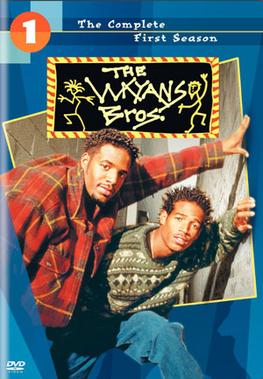
My brother and I knew that once 6pm hit, no matter what we would be watching, we’d have to tune into the news. I could not quite understand why my father would make us watch or read about politics, especially before I reached my teenage years. If it was up to me, I would have been watching The Wayans Bros.

Part of the reason my parents put on the news had to do with their educational experience back in Ecuador. Like primary and secondary school students in many other Latin-American countries, they were required to take a civics class, meant to teach them about the workings of government and the role they could play toward progress and social betterment.

The message of those classes stuck with my parents, even if the Ecuadorian government didn’t always live up to classroom standards. My father felt that if we understood the political landscape, we would feel a sense of responsibility to do our part in making sure our country moves forward in a socially responsible manner.

However, current events aren’t the only things that shape my opinions and concerns. I also cared deeply about family and community. With politicians promoting anti-immigrant policies and xenophobia – opposed to actual reform – I feel an obligation to consider the greater Latino community, not just my own interests.

Like many children of Latino immigrants born in this country, I witnessed the social and economic struggles my parents went through on a daily basis. I was exposed to this reality at a young age, giving me a sense of familial responsibility, a cultural trait that I’ve seen many times over in other Latino and immigrant families, regardless of country of origin or economic status. Whether I was interpreting, filling out forms, or attending doctor’s appointments, I became aware of how government and its institutions work – or don’t work – to serve immigrant communities.

In this respect, our sense of advocacy transcends politics. To borrow a phrase from gender activists, I would say that within our Latino culture, the personal is political. Issues of immigration, healthcare, labor, and education aren’t just up for debate – they’re issues that affect our families directly.

We cannot solely blame government for ignoring Latinos. We should also hold ourselves accountable. While we are the largest ethnic minority in the United States and our voting population is 9.7 million, only 50 percent of eligible Latino voters actually vote! We live in a democratic country where we have a chance to make our voice heard at the polls, but the Latino voting population has not done its part. So how can we expect government to address our concerns when we don’t turn out for elections?

Once I turned 18, instead of voting before work, my father would wait for me in the evening and we would take a trip to the election polls as a family. Even now that I am married and living on Long Island, when election time comes around he will not forget to ask, “Ya votastes mija?” or “You already voted?”

I realize that it’s easier for me to remember to vote because I grew up with a civic-minded father. But as I think about the Latino voting population in the US, which continues to increase by about 500,000 every year, I hope that parents across the country are nagging their kids on election day, changing the channel to the news at 6pm, and teaching our next generation about the power of their vote.

(This post was first featured in Long Island Wins http://longislandwins.com/index.php/features/detail/latino_political_power_starts_at_the_dinner_table/)

Domestic Worker Protections Should Extend Beyond New York

This past week, the Labor and Industrial Relations Committee in the California State Senate voted in favor of a domestic workers bill of rights that would provide basic labor protections for those workers in California.

Now the legislation will move to the Fiscal Committee; if approved, the entire State Senate will then vote on it.

As California’s domestic workers struggle to attain basic labor rights, I recall my master’s fieldwork spent studying the work of the New York City-basedDomestic Workers United in February 2010.

The organization traveled to Albany once or twice a month to lobby for theDomestic Workers Bill of Rights in New York State. During one trip I was given the opportunity to serve as an interpreter for a group of women.

As I walked down the halls of the capital building with the group, I clearly recall one woman who was not able to catch up. I remember asking myself, “Why does she walk so slow? Is she scared? Does she not want to be here?”

I found the answer later that day as I interpreted her story about abuses she suffered as a domestic worker.

She was forced to clean on her knees for hours, and now she could barely walk due to the excruciating pain she felt both in her knees and her feet. She endured verbal abuse while braving seven-day workweeks, with each day’s work lasting more than eight hours. Not only was she underpaid at her job, she was eventually fired with no warning.

Her basic rights were being violated yet there was no legislation protecting her and the approximately 200,000 other domestic workers in New York. My voice shook in an attempt to hold back tears as I had to translate her story for our meeting with a group of state senators.

That’s when I realized the importance of the Domestic Workers Bill of Rights, which was eventually signed into law in August 2010 by Governor Paterson.

The domestic work industry has become a robust foundation in today’s economy. As women have taken on an active role in what were once exclusively male workplaces, families have increasingly sought the services of domestic workers. And in the wake of the economic crisis, this industry has become highly susceptible to exploitation.

That’s why the bill of rights was so important. It grants basic rights to a historically excluded group of workers: The right to overtime pay, the right to at least one day of rest each week, the right to protection against any form of harassment under New York State law.

In the fight over domestic worker rights, we can see issues of ethnicity, gender, and immigration intertwine.

Many domestic workers – nannies, housekeepers, and caregivers for the elderly – are women of color. Many of them are immigrants. However, these women are often not viewed as regular workers. Due to the nature of the work, these jobs are perceived more as the duty of the woman, a holdover from a time when women were bound to the privacy of their homes.

Domestic work has been historically linked to particular socio-economic groups, such as indentured servants, slaves, or immigrants. In our current era of globalization, the work has often become a form of modern-day slavery, using immigrants, particularly Caribbean and Latina women, to provide the labor.

Considering this long history of mistreatment, I knew there would be opposition to the Domestic Workers Bill of Rights in New York. Prominent Republican leaders in the State Senate wouldn’t support the bill, including Long Island’s Owen Johnson (R-West Babylon) and John Flanagan (R-East Northport), saying they were reluctant to pass a piece of legislation protecting undocumented immigrants.

In their opposition, they failed to recognize the economic and social need for domestic workers on Long Island. They also ignored the motivations of the workers, many of whom are forced to migrate to the US because of free trade, privatization, and the extraction of agricultural and industrial labor in their countries of origin. Instead, these workers are label “illegal,” marginalized in our society, and thus susceptible to abuse and exploitation.

Who can forget Muttontown’s Mahender and Varsha Sabhani, a millionaire couple who enslaved two immigrant domestic workers for five years? The couple forced the victims to work long hours, starved them, and beat and tortured them.

Thanks to the passage of the Domestic Workers Bill of Rights, horrific cases like that can now be brought to the courts or reported to our labor department. Regardless of immigration status, workers can report abusive employers who violate their rights.

New York has already taken a vital step toward recognizing domestic workers and the importance of their contributions within our labor market, regardless of race, gender or immigration status. Now let’s stand by California, and aspire to see such a bill passed in every state.

(This post was first featured in Long Island Wins http://www.longislandwins.com/index.php/features/detail/domestic_worker_protections_should_extend_beyond_new_york/)

For Same-Sex Couples Trapped by the Immigration System, Marriage Equality in New York Isn’t Enough

Within the Latino community, especially back in our countries of descent, homosexuality can be handled as taboo—you know it exists, but you do not talk about it. In most Latin American countries, religion is quite important and shapes the values of many families, creating a sense of animosity towards the LGBT communities.

My parents are from Ecuador, and during a trip there nine years ago, I met individuals who kept their orientation a secret but would ask me how their lifestyle would be perceived in the US. Based on what I told them, they expressed their utmost desire to one day live in New York. This was their American Dream.

In a few weeks, LGBT couples in New York will be able to walk into City Hall and say, “I do,” thanks to the Marriage Equality Act, a law that was recently passed with the support of Governor Cuomo and a majority of New York State’s elected officials.

The mere thought fills me with excitement, even anxiety, at what awaits—New York State, a symbol of equality. It makes me feel good just to write that.

Unfortunately, this historic victory won’t change the way federal law regards LGBT couples, in New York or any other state, and it won’t help such couples enjoy the same rights afforded to their heterosexual counterparts.

Soon after marriage equality passed in New York, I started hearing about another piece of legislation: The Defense of Marriage Act (DOMA).

Signed in 1996 by President Bill Clinton, the act recognizes the institution of marriage as a union between a man and a woman, denying LGBT couples the federal status given to heterosexual spouses.

Not only does the Defense of Marriage Act block marriage equality legislation on a federal level, it grants states the right to not recognize same-sex marriages conducted by other states.

But that’s not all. The law also keeps LGBT spouses from applying for citizenship in the way that a heterosexual spouse could.

It’s no accident that our immigration laws target LGBT couples. Just look at our immigration system’s history of discrimination over sexual-orientation:

The Immigration Act of 1917 placed openly homosexual immigrants under the classification of “mentally defective,” and the amended Immigration and Nationality Act of 1965 linked homosexuality to “sexual deviation,” enacting a closed door policy to any openly gay immigrant.

The Immigration Act of 1990 eventually made legal immigration possible for openly homosexual immigrants, but that still doesn’t account for same-sex couples who want their spouses to join them in the US.

Since the Defense of Marriage Act does not recognize same-sex marriages, one same-sex spouse cannot file for permanent residency for his or her partner, perpetually ostracizing those couples based on their sexual orientation.

Anyone who studies social issues knows that policies and problems tend to be linked to one another. Immigration and LGBT rights are a perfect example.

Immigrants today, regardless of their sexual orientation, share the aspirations that newcomers throughout history have expressed – the desire for life, liberty, and the pursuit of happiness.

For me, it all comes back to the people who I met in Ecuador. One particular guy who I met was living in secret. When I asked him what came next, he said “nothing.” He planned to eventually marry a woman and have children. He would be stuck living in the shadows, only able to dream of a different life in the US.

As a country, we should be proud that members of LGBT communities abroad look upon us in such a positive light. Let’s try to live up to that reputation, and support changes to our immigration system that will give long overdue equal rights to LGBT couples.

(This post was first featured in Long Island Wins: http://www.longislandwins.com/index.php/features/detail/for_same-sex_couples_trapped_by_the_immigration_system_marriage/)

Un Blanquito+Una Latina in a modern day world??

Interracial relationships and marriages are a topic that people choose not to talk about, instead many just choose to quietly judge or gawk at it. As long as it does not hit close to home, it will be a subject untouched for most. Based on a Gallup research, 83% of Americans approve interracial relationships/marriages however only about 8% of marriages are interracial. If most people seem to "approve" of it then why such a scarce number? If racism is allegedly diminishing from our melting pot society why such an obvious hesitation to approach a racially blind relationship?...My answer to this, interracial relationships continue being a taboo within our society.

Before 1967, interracial marriages and relationships were a cultural abomination within the United States. Interracial marriages and relationships were considered illegal by law. These laws were initially introduced within the thirteen colonies and continually enforced in states such as Virginia (the Racial Integrity Act of 1924) and Alabama -- all until 1967's Loving v. Virginia case. A white man and an African & Native American woman were married in DC in 1958; they were Virginia natives and were both caught sleeping in bed by officers who were defending the Integrity Act . They were thus sentenced to prison for one year that in turn was suspended as long as they left the state. After the ACLU filed a motion on their behalf, the Supreme Court ruled against any law throughout the nation which enforced anti-miscegenation.

Today, many fear to be labeled racist and choose to quietly disapprove of such a relationship while expressing progressive views publicly. However, there are groups in which attempt to digress back towards the anti-miscegenation laws. Such is the case in Mississippi -- A poll conducted by the Public Policy Polling announced that 49% of Mississippi residents desire to have interracial marriages/relationships banned. In Lousiana a Justice of the Peace, Keith Bardwell, refused to marry any interracial couple. The resistance to interracial marriages/relationships does not only come from one group. People of other backgrounds also perceive interracial marriages/relationships unseen for many reasons that may be similar to that of white groups. They might perceive it as a form of betrayal or selling out.

I am married to what many Latinos would call a, Blanquito/Gringo/Zuco/Colorado, in plain English - a white boy. However, when I met him, he was just another human being who soon became my partner. I am a Latina, very ethnic looking at that so walking down the streets of New York City we did get some looks of curiousity, some of disapproval from both sides. Walking down the streets of Babylon Village, there were the same looks however in a predominantly white community dissaproval was a bit more obvious and well, pissed me off. One day we were both curious with what each side was thinking. I tried so hard not to pre-judge many of the white people's stares and he felt the same way about Latinos. As we exchanged our thoughts and what our cultures were quietly thinking we both came to the conclusion that some things have yet to change...

I told him some Latinas or Latinos look for white partners to move up socially and even economically within society, this is not a generalization just cases I have seen and heard personally. Therefore others within our community consider that a form of selling out which of course I would agree because searching for someone based upon race is racist in its own matter. Others would feel its a form of betrayal to our community; a lack of solidarity and embarrassment of where one comes from, their identity. I have also had friends who have asked me, "What? No good Latin men?" and my answer would be "I'm sure there are, but I don't require a Racial ID". From his side, he made me aware that ignorance continues to exist filled with stereotypes and some that coincide with some of my community's misperceptions. He made me aware that while many looks might be curious looks, others were of disapproval. Individuals might think its a step down from the social ladder. A white man rescuing a latina from the ghetto. Therefore she must be somewhat un-educated, have an accent and maybe even not documented.

As we both confirmed the world has not caught up to present day, we both knew it would be a little harder since we both had to educate others down this path and continue doing so. I speak Spanish fluently and as many of you know my identity has a solid foundation. I don't have an accent, I love the skin I'm in and am very proud, I hold a Master's Degree and can hold a conversation with anyone. As for my husband, no he did not save me from any ghetto (I did not need any saving from anything; I love where I came from). He eats latin dishes, dances, speaks a little Spanish -- ultimately respecting my identity as I respect his.

Interracial marriages/relationships are quite the taboo however, its a taboo because there is a small amount as it requires a little more work due to the societal pressures that exist. But what's taboo is not necessarily wrong....

[twitter-follow screen_name='BellaCereja']